

Here's a mistake we see constantly: teams assume their GEO competitors are the same companies they compete with on Google. They're not. In AI search, the brands that appear in responses to your target queries can include niche blogs, Reddit threads, comparison sites, and industry publications you've never considered rivals.
Identifying your real GEO competitors is the essential first step of any GEO implementation. If you don't know who gets cited instead of you, you can't build a strategy to replace them. This guide walks you through the complete process, from running your first competitive audit to building an ongoing monitoring system.
Why GEO Competitors ≠ SEO Competitors
In traditional SEO, your competitors are whoever ranks for the same keywords. A SaaS company selling CRM software competes with Salesforce, HubSpot, and Pipedrive on Google's results page. The landscape is predictable and stable.
In AI search, the competitive landscape is fundamentally different. When someone asks ChatGPT "What's the best CRM for a 20-person sales team?", the response might cite a G2 comparison page, a Reddit thread from r/sales, a blog post from a SaaS review site, and maybe one or two actual CRM brands. Your direct product competitors may not even appear.
This happens because AI engines use Retrieval-Augmented Generation (RAG) to synthesize answers from multiple sources. They don't rank pages against each other. They select the most useful, authoritative fragments from across the web and weave them into a single response. The "competitors" for any given query are every source the AI might choose to cite instead of you.
Research from LLMrefs confirms the scope of this disconnect: the overlap between top Google links and AI-cited sources has dropped from 70% to below 20%. This means the majority of sources AI engines cite don't even rank in Google's top 10 for that query. Your SEO competitor analysis is, at best, 20% relevant to your GEO strategy.
Overlap between top Google results and AI-cited sources. 80%+ of the sources AI engines cite are different from what ranks on Google.
The Three Types of GEO Competitors
To build an effective GEO strategy, you need to identify and track three distinct categories of competitors.
1. Direct Competitors
These are the companies selling similar products or services. In your Clairon dashboard, they're the brands that appear in AI responses when users ask comparison or recommendation queries ("best X for Y", "X vs Y", "top tools for Z"). You probably know most of these already from your SEO competitor list, but AI engines may weight them differently. A smaller competitor with better-structured content might get cited more than the market leader.
2. Content Competitors
These are publications, blogs, and media sites that AI engines cite when answering informational queries in your space. They don't sell a competing product, but they compete for the same citation slots you want. Think: industry blogs, news outlets, analyst firms, and SaaS review platforms like G2, Capterra, or TrustRadius. Content competitors often dominate AI responses because they have high domain authority, broad topical coverage, and content specifically designed to answer the types of questions users ask AI.
3. Platform Competitors
These are aggregator platforms that consistently appear across AI responses regardless of the specific query. Reddit, Quora, Wikipedia, YouTube, and review sites are the most common. Semrush's analysis of Google AI Overviews found that Reddit and Quora are among the most-referenced domains across all categories. These platforms compete with you for citation space because AI engines trust community-validated, multi-perspective content.
| Type | Examples | Why AI Cites Them | How to Compete |
|---|---|---|---|
| Direct | Product competitors (Salesforce, HubSpot) | Brand recognition, product pages, comparison queries | Better content structure, more data, stronger E-E-A-T |
| Content | Industry blogs, G2, Capterra, analyst firms | High authority, broad coverage, designed for extraction | Earn mentions on these sites, create more authoritative first-party content |
| Platform | Reddit, Quora, Wikipedia, YouTube | Community trust, diverse perspectives, freshness | Build presence on these platforms, ensure your brand is discussed |
How to Run a GEO Competitive Audit
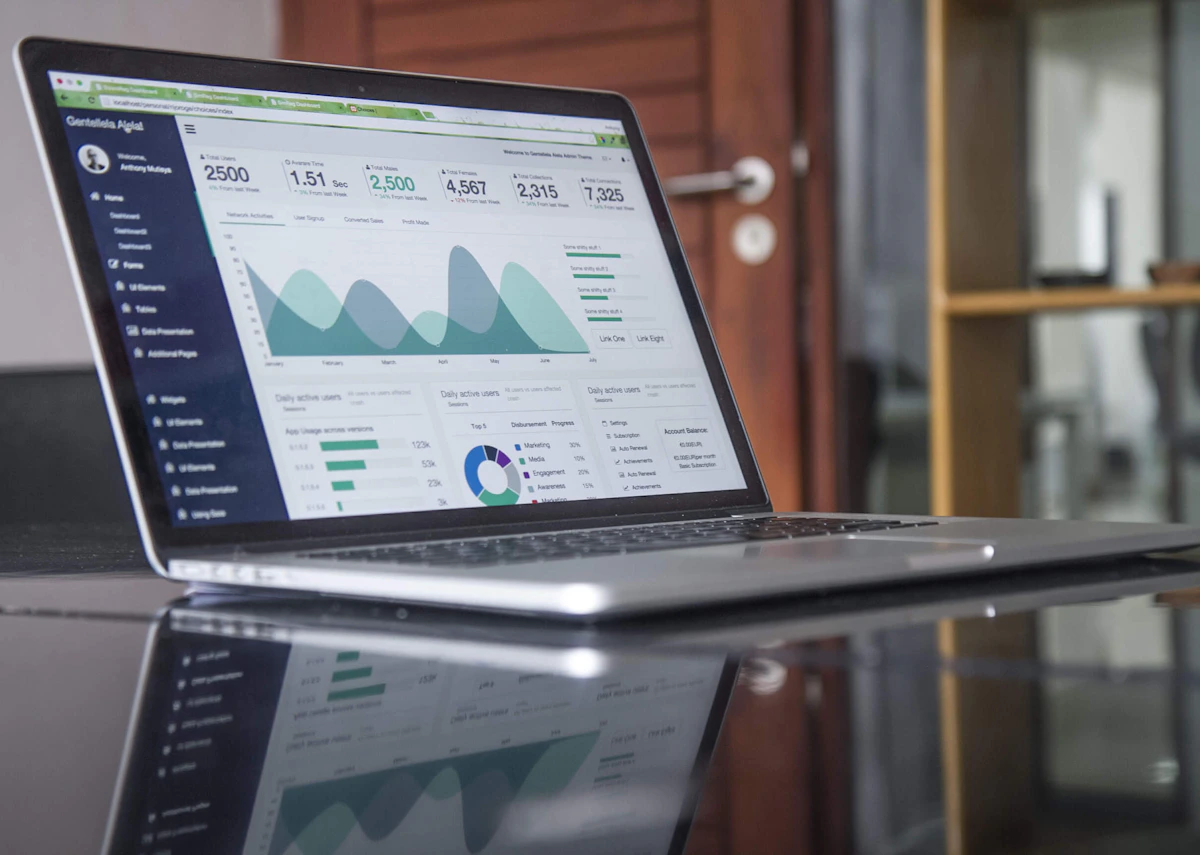
A GEO competitive audit reveals exactly who gets cited for the queries that matter to your business. Here's the process.
Step 1: Build Your Prompt Library
Create a list of 20-50 prompts that represent your target audience's actual questions across the buyer journey. Organize them into three categories:
Awareness prompts: "What is [your category]?", "How does [technology] work?", "Why do companies use [solution type]?"
Consideration prompts: "Best [product type] for [use case]", "Compare [category] tools", "[Your brand] vs [competitor]", "Top [solution] for [industry]"
Decision prompts: "Is [brand] good for [specific need]?", "[Brand] pricing", "[Brand] reviews", "Should I switch from [competitor] to [brand]?"
Map high-intent queries from your Google Search Console to natural AI phrasing. "CRM software small business" in Google becomes "What's the best CRM for a small business with 10 employees?" in ChatGPT.
Step 2: Run Prompts Across AI Platforms
This is where Clairon saves you weeks of manual work. Add your prompt library to Clairon, and the platform automatically runs each prompt across ChatGPT, Perplexity, Gemini, Claude, Grok, and Google AI Overviews. For each response, Clairon captures:
Brand mentions: Every brand named in the AI response, with position and context. Is your brand mentioned first, last, or not at all?
Source citations: Every URL the AI links to as a source. Which domains get cited? Which specific pages?
Competitor frequency: How often each competitor appears across your full prompt library. One mention is noise. Ten mentions is a pattern.
Platform differences: Which competitors dominate on ChatGPT vs Perplexity vs Gemini? The landscape varies significantly by platform. A brand that dominates ChatGPT responses might be absent from Perplexity entirely.
Geographic variation: Clairon runs prompts across 200+ countries, revealing competitors that dominate in specific markets. Your GEO competitor in the US might be completely different from your GEO competitor in France or Germany.
Step 3: Map the Competitive Landscape
From your Clairon data, build a competitive map. For each target prompt, document: which brands appear, which sources are cited, and what position your brand holds (if any). The patterns that emerge will be your strategic foundation.
Look for: brands that appear across multiple prompts (your primary GEO competitors), sources that get cited repeatedly (the authority sites AI trusts most in your space), and queries where no strong brand dominates (your biggest opportunities).
Of cited domains change month to month. Your GEO competitive landscape is far more volatile than your SEO landscape, requiring continuous monitoring.
Analyze Why They Get Cited
Knowing who gets cited is only half the battle. Understanding why they get cited tells you what to replicate or surpass.
Content Structure Analysis
Visit the top-cited pages for your target queries. Analyze their structure: Do they use question-format headers? Do they front-load answers? Is the content modular (each section stands alone)? Do they include specific data points, named sources, and verifiable claims? In most cases, the top-cited pages share a common pattern: clear structure, high factual density, and easy extractability.
Authority Signal Analysis
Examine the authority signals of cited competitors. Check their domain rating, but more importantly, check how many authoritative third-party sources mention them. Clairon's source analysis reveals the domains AI engines cite alongside each competitor. If a competitor consistently appears next to sources like G2, TechCrunch, and industry-specific publications, that's an authority pattern you need to understand.
Remember: web mentions correlate 3x more strongly with AI citations than traditional backlinks (0.664 vs 0.218 correlation). A competitor's authority in AI search comes more from being discussed across the web than from having a high DR.
Freshness Analysis
Check the publication and update dates of cited content. AI engines favor fresher content. Research shows that content cited by ChatGPT averages 1,000 days old versus 1,400 days for Google. If your competitors have recent, updated content and your pages are from 2022, that's a gap you can close quickly.
Entity Strength Analysis
How well-defined is each competitor as an entity in AI's understanding? Check: Do they have a Wikipedia page? A complete Google Knowledge Panel? Consistent brand information across the web? A strong Wikidata entry? Entity clarity helps AI systems confidently cite a brand. If a competitor has a robust entity presence and you don't, that's a structural advantage you need to address. Our Entity Optimization Guide covers this in detail.
Find Your Competitive Gaps
With your competitive audit data from Clairon, you can now identify specific, actionable gaps in your GEO strategy.
Citation Gaps
Queries where competitors get cited and you don't. These are your highest-priority opportunities. For each gap, determine what the competitor has that you lack: is it a specific page that answers the query? Better structure? More authority signals? Or simply fresher content?
Platform Gaps
You might appear in ChatGPT but be absent from Perplexity, or visible in Google AI Overviews but missing from Gemini. Clairon's platform-by-platform view reveals where you're strong and where you need work. Since 89% of Perplexity citations come from different sources than ChatGPT for the same query, platform-specific gaps are common and important to address.
Geographic Gaps
AI responses vary by country and language. A brand that dominates AI responses in the US market might be completely absent in European or Asian markets. Clairon's 200+ country monitoring reveals geographic gaps that most competitors aren't even tracking. International brands should check their visibility in every target market, as AI responses can vary dramatically by region.
Topic Gaps
Queries in your space where no competitor has strong visibility. These are blue ocean opportunities where well-structured, authoritative content can quickly earn citations with minimal competition. Build content for these queries first, as they offer the highest citation probability with the least effort.
Source Gaps
Third-party sites where competitors are mentioned but you're not. If AI consistently cites a G2 comparison page that includes your competitor but not you, getting listed on that page becomes a direct path to AI visibility. Clairon's source tracking shows which third-party domains are most influential for your target queries, so you can prioritize your off-site efforts.
Build an Ongoing Monitoring System
GEO competitive analysis isn't a one-time project. The AI citation landscape is volatile: 40-60% of cited domains change month to month. New competitors enter, existing competitors optimize, and AI engine behaviors evolve. You need a system that tracks these changes continuously.
Set Up Automated Tracking in Clairon
Configure Clairon to run your full prompt library on a regular cadence across all target AI platforms and geographies. Set up alerts for key events: a new competitor entering your space, your brand dropping out of a previously cited query, or a significant shift in citation sources. This turns competitive monitoring from a quarterly project into an always-on intelligence feed.
Establish Your Competitive Cadence
Weekly: Review Clairon's Share of Voice dashboard. Flag any significant changes in competitor visibility or new entrants. Check if any of your optimized pages have gained or lost citations.
Monthly: Deep-dive into competitor citation changes. Which competitors gained visibility and why? Review new content they published, PR mentions they earned, and structural changes they made. Use these insights to adjust your own optimization priorities.
Quarterly: Conduct a full competitive re-audit. Expand your prompt library based on new topics and queries that have emerged. Reassess your competitor categories: new direct competitors may have entered the market, and the platform competitors that dominated three months ago may have shifted.
Build Competitive Intelligence into Your Content Calendar
Every content decision should be informed by competitive data. When planning new articles, check: Which competitors currently own this query? What sources does AI cite? What gaps exist in their coverage that you can fill? When updating existing content, compare its structure and depth against the pages AI currently cites. If a competitor's page is better structured, more data-rich, or more recently updated, match and exceed their standard.
The brands that win in GEO aren't the ones that optimize once. They're the ones that build competitive intelligence into every marketing decision, and iterate faster than their competitors.
See exactly who AI cites instead of you
Clairon runs your prompts across ChatGPT, Perplexity, Gemini, Claude, Grok, and AI Overviews in 200+ countries. Get your competitive map in minutes, not weeks.
Your GEO competitors are not your SEO competitors. Less than 20% of AI-cited sources overlap with Google's top results. You need to identify three types of GEO competitors: direct (product rivals), content (publications and review sites), and platform (Reddit, Quora, Wikipedia).
Run a structured competitive audit using Clairon to map who gets cited across AI platforms, analyze why they get cited (structure, authority, freshness, entity strength), and identify the specific gaps you can exploit. Then build continuous monitoring into your workflow, because 40-60% of cited sources change every month.
Continue with the competitive intelligence series:
How to Track Competitor AI Visibility
Competitor Citation Analysis: Find Their Sources
How to Do GEO: Complete Implementation Guide
How to Find Which Sources AI Engines Use
How to Get Cited by AI Search Engines
.png)
.png)


